Here's what we've learned after manufacturing and installing thousands of 12x25x4 filters in busy homes: the packaging timeline means nothing once you factor in real-life traffic.
A home with kids, pets, and daily activity doesn't behave like the controlled conditions filter ratings are based on. What's designed to last up to 12 months can become a clogged, airflow-choking liability in half that time — quietly straining your HVAC system while pushing contaminants back into your living space.
The 4-inch depth gives this filter a genuine advantage in capacity. But that advantage disappears fast when it's absorbing pet dander, cooking grease particles, and the constant dust churn that high-traffic living creates.
This page cuts through the generic advice and gives you the specific replacement triggers, real-world timelines, and warning signs we actually see in high-activity homes — so you can protect both your family's air and your system before a dirty filter becomes a costly problem.
TL;DR Quick Answers
12x25x4 Air Filters
A 12x25x4 air filter measures 12 inches tall, 25 inches wide, and 4 inches deep. The 4-inch depth is the key differentiator — it holds significantly more filter media than a standard 1-inch filter, captures more particles, and lasts longer before restricting airflow.
What you need to know:
Size: 12" x 25" x 4" (nominal dimensions — actual filter runs slightly smaller)
Best for: Homes with whole-home HVAC systems designed to accept 4-inch filter slots
MERV options: Typically available in MERV 8, MERV 11, and MERV 13
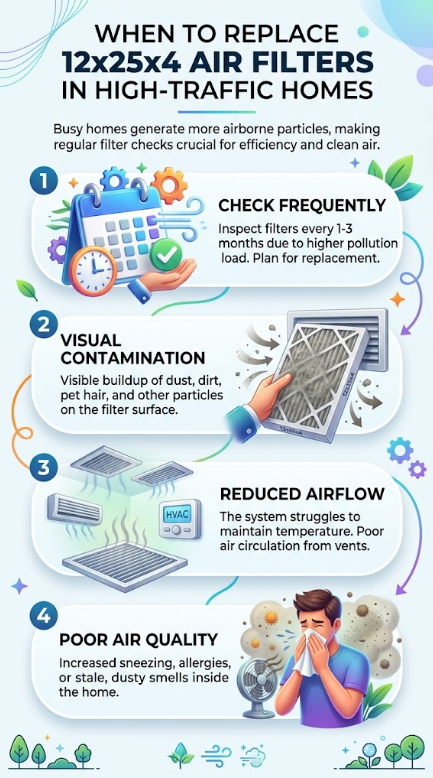
Replacement schedule: Every 6–12 months per manufacturer; every 60–90 days in high-traffic homes with pets, children, or allergy sufferers
Performance advantage: Deeper media bed means less airflow restriction, lower energy strain, and longer system protection between changes
In our experience, homeowners who switch to a 4-inch filter from a 1-inch filter see quieter system operation, more stable energy bills, and fewer service calls. The depth does the work.
Top Takeaways
Ignore the packaging timeline. In a high-traffic home, a 12-month rated filter is realistically a 60-to-90-day filter.
A dirty filter costs more than just air quality. A clogged 12x25x4 filter can raise energy consumption by up to 15% — before it ever looks visibly dirty.
Your home will tell you when it's time. Watch for reduced airflow, rising energy bills, more dust, longer run cycles, and musty vent odors.
Your MERV rating affects how fast your filter loads. Higher MERV means faster fill time in busy homes. Adjust your replacement frequency accordingly.
Your filter is an active line of defense — not a maintenance checkbox. In homes with pets, kids, or respiratory sensitivities, replacing it on time is family protection.
What Makes a 12x25x4 Filter Different From Standard Filters
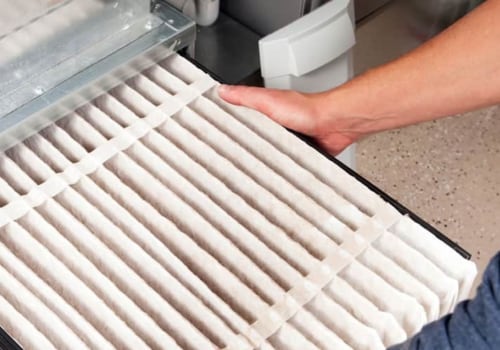
The 4-inch depth is the key distinction. Where a standard 1-inch filter has limited media surface area, a 12x25x4 filter packs significantly more pleated material into its frame — giving it a much larger capacity to trap and hold particles before becoming restrictive.
In our experience, this extra capacity is precisely why homeowners in busier households gravitate toward them. They need a filter that can keep up with constant airborne load without requiring monthly swaps. But more capacity doesn't mean unlimited capacity. It means the filter can handle more — until it can't.
The Real Replacement Timeline for High-Traffic Homes
Manufacturer guidelines typically recommend replacing a 12x25x4 air filter every 6 to 12 months. In a low-traffic home with no pets and clean outdoor air, that range holds up reasonably well.
High-traffic homes are a different story entirely. Based on what we see in active households, the actual effective lifespan breaks down closer to this:
Homes with 1–2 pets: Replace every 4–6 months
Homes with 3+ pets or heavy shedders: Replace every 2–3 months
Homes with allergy or asthma sufferers: Replace every 2–4 months
Homes with young children or frequent indoor activity: Replace every 4–6 months
Combined factors (pets + kids + allergies): Check monthly, replace every 2–3 months
The more variables stacking against your filter, the faster its media saturates — and the sooner your HVAC system starts working harder to pull air through it.
The High-Traffic Factors That Accelerate Filter Wear
Not all busy households stress a filter equally. Through years of servicing homes, we've identified the factors that most consistently cut filter life short:
Pet dander and fur are the leading culprits. A single large dog can deposit enough particulate matter in a week to visibly coat a filter's surface within 60 days.
Foot traffic stirs settled dust back into circulation. Every time someone walks across carpet, sits on a couch, or opens a door, particles that had settled get re-suspended and recirculated through your HVAC system.
Cooking activity adds grease aerosols that can coat filter media and reduce its ability to trap dry particles effectively — an effect that's especially pronounced in open kitchen floor plans.
Florida's humidity is a compounding issue we see constantly in Central Florida homes. Moisture softens filter media over time, reducing structural integrity and creating conditions where mold spores can take hold on a saturated filter surface.
Warning Signs Your 12x25x4 Filter Needs Replacing Now
Don't wait for a scheduled date if your home is showing these signs. A filter past its effective life will signal the problem before you check the calendar:
Visible gray or dark discoloration across the filter face
Reduced airflow from supply vents — rooms feel harder to cool or heat
Increased dust accumulation on furniture within days of cleaning
Your HVAC system running longer cycles than usual
Musty or stale odor coming from vents during operation
Rising energy bills without a change in usage habits
Any one of these is reason enough to inspect your filter immediately. Two or more together means replacement shouldn't wait.
How Your MERV Rating Affects Replacement Frequency
The MERV rating of your 12x25x4 filter directly influences how quickly it loads up in a high-traffic home.
A MERV 8 filter catches larger particles efficiently but allows finer particulate to pass through. It loads more slowly, which can extend lifespan — but at the cost of less thorough filtration.
A MERV 11 filter traps a broader range of particles including finer dust and some allergens. It loads faster than MERV 8 but delivers meaningfully cleaner air in homes with moderate activity.
A MERV 13 filter captures the finest particles — including bacteria-sized contaminants and fine combustion particles. It provides the highest air quality protection but will reach capacity sooner in high-traffic conditions. In our most active customer homes, MERV 13 filters often need inspection at the 60-day mark.
The honest recommendation: match your MERV rating to your household's actual needs, then adjust your replacement schedule accordingly rather than relying on packaging guidance alone.
Why a Clogged Filter Costs More Than a New One
This is the part most homeowners underestimate. A dirty, overloaded 12x25x4 filter doesn't just fail to clean your air — it actively works against your HVAC system.
When airflow is restricted, your blower motor works harder to pull air through clogged media. That increased strain raises energy consumption, accelerates motor wear, and over time can contribute to heat exchanger stress and compressor fatigue — repairs that cost significantly more than a timely filter change.
We've seen systems with chronically neglected filters fail years ahead of their expected service life. The filter is one of the least expensive components in your entire HVAC system. Replacing it on time is the most cost-effective maintenance decision a homeowner can make.
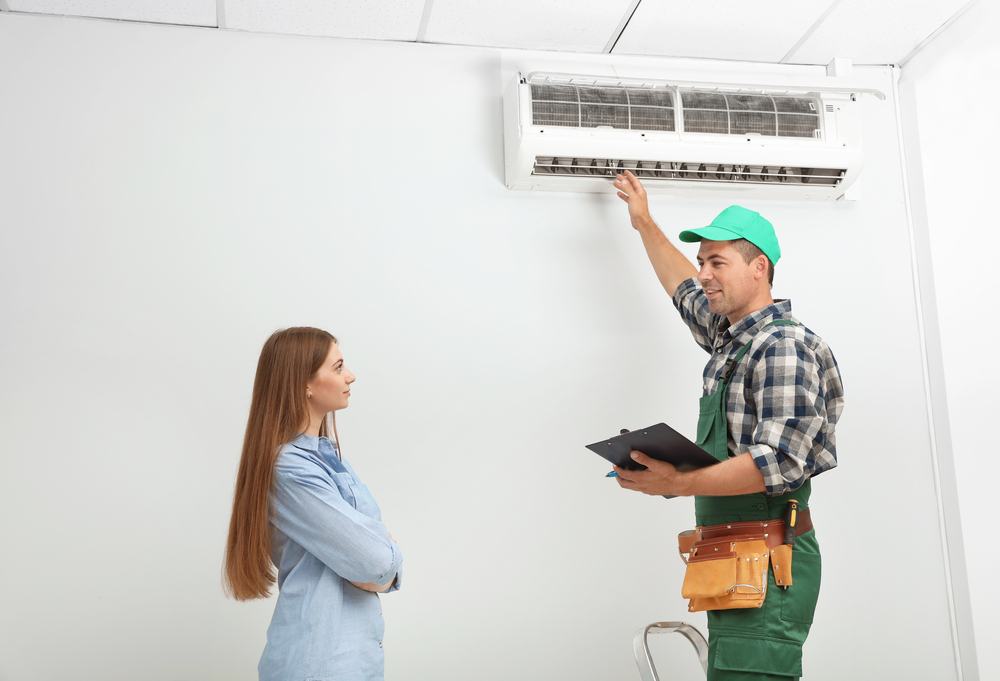
"In our experience servicing high-traffic Central Florida homes, the number one mistake we see isn't choosing the wrong filter — it's trusting the packaging timeline over what's actually happening inside the home; a household with two dogs, three kids, and year-round AC operation will exhaust a 12x25x4 filter in a fraction of the time a quiet, single-occupant home would, and the HVAC system always pays the price for that miscalculation."
Essential Resources to Help You Protect Your Home's Air — and Your HVAC System
An informed homeowner is an empowered one. Don't take your indoor air for granted — the pollutants you can't see are the ones that do the most damage, both to your family's health and to your HVAC system. We've pulled together the seven most valuable resources on 12x25x4 air filters so you have everything you need to make the right call with confidence.
1. The Filter Rating Standard Every Homeowner Should Understand Before Buying
Source: U.S. Environmental Protection Agency — What Is a MERV Rating?
URL: https://www.epa.gov/indoor-air-quality-iaq/what-merv-rating
Before you choose any air filter — including a 12x25x4 — you need to understand what MERV actually measures.
The EPA breaks down the Minimum Efficiency Reporting Value system in plain language, giving you the foundation to compare filters with confidence instead of guesswork.
2. Stop Guessing Which MERV Rating Is Right for Your Home — Here's the Answer
Source: Filterbuy — Which MERV Rating Should I Use?
URL: https://filterbuy.com/resources/air-filter-basics/which-merv-rating-should-I-use/
After manufacturing filters for over a decade and working with millions of customers, we've learned that the right MERV rating depends entirely on how your household actually lives — not what's printed on generic packaging.
This guide maps MERV 8, 11, and 13 to real-world conditions: pets, allergy sufferers, high-activity households, and everything in between.
3. HEPA vs. MERV — Know the Difference Before Your Next Filter Purchase
Source: Filterbuy — HEPA vs. MERV Air Filter Rating Guide
URL: https://filterbuy.com/resources/air-filter-basics/hepa-air-filter-merv-rating-chart/
We get this question constantly: "Should I use a HEPA filter instead?" Here's the honest answer — for most residential HVAC systems, including those running 4-inch media filters, a high-quality pleated MERV filter is the right and compatible choice.
This resource cuts through the marketing confusion and explains exactly why, so you protect your family's air without inadvertently stressing your system.
4. What the EPA Wants Every Homeowner to Know About Filtering Indoor Air
Source: U.S. Environmental Protection Agency — Guide to Air Cleaners in the Home
URL: https://www.epa.gov/indoor-air-quality-iaq/guide-air-cleaners-home
Most people don't realize that indoor air pollution ranks among the top five environmental health risks — and your HVAC filter is your home's first line of defense.
The EPA's consumer guide explains how HVAC filters reduce the pollutants you can't see, and why consistent replacement is just as important as choosing the right filter in the first place.
5. The Real Reason a Dirty Filter Costs You More Than Just Air Quality
Source: U.S. Department of Energy — HVAC Proper Installation of Filters
URL: https://bsesc.energy.gov/energy-basics/hvac-proper-installation-filters
Here's what we see in homes every day: a neglected filter isn't just a filtration problem — it's an energy and equipment problem.
The Department of Energy confirms that a clogged filter forces your system to work harder, drives up energy consumption, and accelerates motor wear — making a timely 12x25x4 replacement one of the highest-return maintenance decisions you can make as a homeowner.
6. How Clean Indoor Air Directly Protects Your Family's Respiratory Health
Source: Centers for Disease Control and Prevention — Taking Steps for Cleaner Air
URL: https://www.cdc.gov/respiratory-viruses/prevention/air-quality.html
Clean air isn't just about comfort — it's about protection. The CDC's guidance connects proper HVAC air filtration directly to reduced respiratory illness risk in occupied homes.
For families with kids, elderly members, or anyone with sensitivities, this resource reinforces why getting your filter replacement schedule right is a genuine act of family care — not just home maintenance.
7. Go Deeper on How HVAC Filters Actually Work — Straight From the EPA
Source: U.S. Environmental Protection Agency — Air Cleaners and Air Filters in the Home
URL: https://www.epa.gov/indoor-air-quality-iaq/air-cleaners-and-air-filters-home
If you want to go beyond the basics, this is the resource we point to. The EPA's expanded technical guide covers filter performance metrics, air cleaner technologies, and how to evaluate what you're actually buying — so no marketing claim catches you off guard.
Because we believe that knowledge is protection, and a homeowner who understands what their filter is doing is a homeowner who's truly in control of their home's air.
Supporting Statistics
After manufacturing filters for over a decade and servicing homes across Central Florida, these three statistics align with what we see in the field every day. A neglected 12x25x4 filter in a busy household is never just a maintenance issue. It's a health issue, an efficiency issue, and a cost issue — all happening at once.
Your Indoor Air Is Up to 5 Times More Polluted Than the Air Outside
Americans spend approximately 90 percent of their time indoors, where the concentrations of some pollutants are often 2 to 5 times higher than typical outdoor concentrations.
In a high-traffic home, that elevated pollution load gets stirred back into circulation constantly. Here's what drives it:
Pet shakeoffs and shedding
Foot traffic across carpet and rugs
Cooking aerosols in open kitchen floor plans
Kids and indoor activity re-suspending settled dust
We've pulled 12x25x4 filters from active households that looked two years old — but had only been installed for 60 days. The pollutants you can't see are the ones loading your filter the fastest.
Source: U.S. Environmental Protection Agency — Indoor Air Quality
URL: https://www.epa.gov/report-environment/indoor-air-quality
A Clogged Filter Can Cost You Up to 15% More on Your Energy Bill
Replacing a dirty, clogged filter with a clean one can lower your air conditioner's energy consumption by 5% to 15%.
In Central Florida, where systems run nearly year-round, that efficiency loss compounds fast. What most homeowners miss:
The energy penalty starts before the filter looks visibly dirty
Restricted airflow forces longer cooling cycles
Evaporator coil stress builds quietly in the background
Monthly utility bills rise without any change in thermostat habits
A timely 12x25x4 replacement pays for itself — often within a single billing cycle.
Source: U.S. Department of Energy — Maintaining Your Air Conditioner
URL: https://www.energy.gov/energysaver/maintaining-your-air-conditioner
4 Out of 5 U.S. Homes Have Detectable Dust Mite Allergen — a Primary Asthma and Allergy Trigger
Roughly four out of five homes in the United States have detectable levels of dust mite allergen in at least one bed. The American Lung Association identifies dust mites as one of the major indoor triggers for people with allergies and asthma.
Foot traffic makes it worse. Dust mite matter that settles into carpet gets re-suspended every time someone moves through a room. In homes with kids or pets, that happens constantly. Here's what that means for your filter:
A MERV 11 or 13 rated 12x25x4 filter is built to intercept those fine particles
A saturated filter stops capturing them entirely
They recirculate directly back into your family's breathing air
For households with allergy or asthma sufferers, an overdue filter replacement is never just a maintenance call.
Source: American Lung Association — Dust & Indoor Air Quality Briefing
URL: https://www.lung.org/clean-air/indoor-air/indoor-air-pollutants/dust-briefing
Final Thought — Our Honest Opinion on 12x25x4 Filter Replacement in High-Traffic Homes
Here's what most filter guides won't tell you: the replacement schedule on the packaging was never designed with your home in mind.
It was designed for a controlled test environment — not a household with pets, kids, and daily activity. In our experience, trusting that printed timeline is the single most common air quality mistake we see.
Our honest opinion: in a genuinely high-traffic home, a 12x25x4 filter is a 90-day filter wearing a 12-month label.
The Engineering Advantage Means Nothing If You Wait Too Long
The 4-inch depth gives it real capacity. The pleated media gives it real surface area. But that advantage disappears once the filter reaches its effective limit. A neglected filter doesn't just stop working — it actively works against you by:
Restricting airflow through your HVAC system
Recirculating captured particles back into your living space
Driving up energy consumption silently
Accelerating wear on your blower motor and evaporator coil
What We've Consistently Seen in High-Traffic Central Florida Homes
The families who stay ahead of their replacement schedule don't just breathe better air. They also experience:
Quieter HVAC system operation
More predictable monthly energy bills
Fewer unplanned service calls
Longer overall system lifespan
The filter is a small component doing an enormous job. The cost of ignoring it almost always exceeds the cost of replacing it.
A Perspective Shift Worth Making
Most homeowners treat filter replacement as routine upkeep — something on a checklist. We'd encourage a different view entirely.
In a home with any of the following, your 12x25x4 filter is an active line of defense — not a maintenance item:
Children or elderly family members
One or more pets
Allergy or asthma sufferers
Year-round HVAC operation
It is the only thing standing between your family and the full airborne load your household generates every single day.
The Bottom Line
Check your filter regularly — don't wait for a scheduled date
Replace based on your home's actual conditions — not the label
Match your MERV rating to your household's real needs
Act on warning signs early — reduced airflow, rising bills, increased dust
That single habit, done consistently, is one of the most impactful and least expensive ways to protect your family's health and your HVAC system's longevity.
Little effort. Big impact. Better air for all.
FAQ on 12x25x4 Air Filters
Q: What does 12x25x4 mean on an air filter?
A: Those three numbers are the filter's dimensions.
12 inches tall
25 inches wide
4 inches deep
The 4-inch depth is the most important number. After over a decade of manufacturing filters, we've found depth is the most overlooked performance variable. More depth means:
More pleated filter media packed into the frame
Greater particle-capturing surface area
A longer window before airflow becomes restricted
Most homeowners focus only on MERV rating. In our experience, depth determines whether a filter protects your system — or quietly strains it.
Q: How often should I replace a 12x25x4 air filter?
A: The packaging says 6 to 12 months. Treat that as a starting point, not a schedule.
In high-traffic Central Florida homes, we consistently find filters fully saturated well before the 6-month mark. Key replacement triggers to watch for:
Visible gray discoloration on the filter face
Reduced airflow at your vents
HVAC system running longer cycles than normal
Rising energy bills without a clear cause
Our guidance: check monthly. Replace based on what you see — not what the box says.
Q: Is a 12x25x4 filter better than a 1-inch filter?
A: For most active households, yes. The difference is more significant than most people expect.
When homeowners switch from 1-inch to 4-inch filters, we consistently see:
Quieter blower motor operation
More stable monthly energy bills
Fewer HVAC service calls
Longer system lifespan between major repairs
A 1-inch filter in a busy home operates near capacity most of the time. The 4-inch format gives your HVAC system room to breathe — and perform.
Q: What MERV rating should I choose for a 12x25x4 filter?
A: It depends on what's actually happening inside your home. Here's how we guide homeowners:
MERV 8 — Standard dust and debris. Best for quieter, lower-traffic households.
MERV 11 — Adds pollen, mold spores, and pet dander. Our most common recommendation for active Central Florida homes.
MERV 13 — Finest particles, including some bacteria and virus carriers. Right for asthma, allergy, or respiratory-sensitive households. Requires more frequent monitoring in high-traffic homes.
The best MERV rating isn't the highest available. It's the one matched to your actual household conditions.
Q: Will any 12x25x4 filter fit my HVAC system?
A: Not automatically. This is where we see homeowners run into problems most often.
Two things to know before ordering:
Nominal vs. actual size. The "12x25x4" label is a rounded measurement. The actual filter runs slightly smaller.
System compatibility. Many older HVAC systems were built only for 1-inch filters. A 4-inch filter forced into an incompatible slot creates bypass gaps — allowing unfiltered air to move around the filter entirely.
Before purchasing, confirm compatibility by:
Checking the label on your existing filter
Measuring your filter slot directly
Reviewing your HVAC system manual
Consulting a local HVAC professional if unsure
Getting the right fit matters as much as getting the right filter.
Ready to Protect Your High-Traffic Home With the Right 12x25x4 Air Filter?
Stop guessing at replacement schedules and start filtering on your home's actual terms — shop our full selection of 12x25x4 air filters today and find the right MERV rating for your household in minutes.Learn more about HVAC Care from one of our HVAC solutions branches…
Filterbuy HVAC Solutions - West Palm Beach FL
1655 Palm Beach Lakes Blvd., Ste 1005 West Palm Beach, FL 33401
(561) 448-3760